

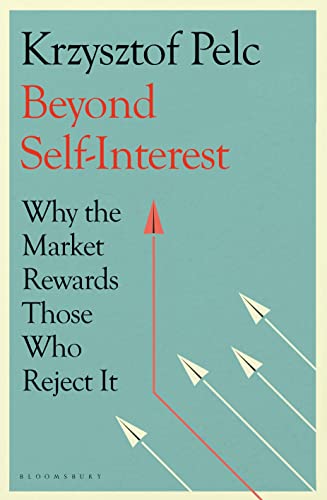
English | 2022 | ISBN: 152664813X | 353 pages | True PDF EPUB | 21.66 MB
A provocative retelling of the workings of self-interest in contemporary market society, which claims the world increasingly belongs to passionates, obsessives, and fanatics: those who do things for their own sake, rather than as means to other ends.
In our capitalist market society, we have come to accept that the way to get ahead is through strong will, grit, and naked ambition. This belief has served us well: it has contributed to making our affluent societies affluent. But does the premise still hold?
As Krzysztof Pelc argues in Beyond Self-Interest , this default assumption no longer captures reality. There is a limit to the returns of calculation, planning, and resolve, and in a growing number of settings, this limit has been reached. The true idols of market society, he contends, are those who disavow their self-interest, or at least appear to do so: eco-conscious entrepreneurs, media moguls with a mission, and modern-day artisans catering to a well-educated and ever more socially conscious population of consumers. Increasingly, those who prosper do so by spurning prosperity, or by convincing others that they are instead pursuing purpose, passion, love of craft-anything but their own self-advancement. This is the paradox of intention, and it is increasingly defining our lives.
Pelc tells the story of this paradox from its unlikely emergence among a group of British thinkers in the early 19th century to its development over the next two centuries, as it was successively picked up by philosophers, novelists, social scientists, and, ultimately, capitalists themselves. All of whom arrived at a common realization: the appearance of disinterest pays, but only if it is believable-which presents the self-interested among us with a tricky problem.
Drawing on three centuries of thought about commercial society and the people living in it, this richly researched account of the cycles of capitalism does not naively suggest that we should reject the market. Rather, it calls on us to treat economic growth once more as its earliest theorists did: as a formidable tool of human development, instead of an end in itself.
Recommend Download Link Hight Speed | Please Say Thanks Keep Topic Live


Links are Interchangeable - No Password - Single Extraction